
Contact dermatitis is a type of rash that results in inflammation of the skin, caused by exposure to allergens (allergic contact dermatitis) or irritants (irritant contact dermatitis). Contact dermatitis is the same thing as eczema [1]. In some cases, the allergen or irritant can be activated by sunlight, in which case it is called phototoxic dermatitis.
The main two types are:
1. Irritant contact dermatitis
2. Allergic contact dermatitis
It is worth saying though, that contact dermatitis is not contagious, however it is hereditary… well, to an extent. People that are what’s known as ‘atopic’, i.e. are predisposed to asthma, eczema and hay fever, develop irritant contact dermatitis more frequently.
Let’s start by talking about irritant contact dermatitis then shall we? This one develops when the skin is in contact with certain irritating substances, and is understandably quite common in professions such as hairdressers and bartenders that come into contact with irritant substances often. [1] This type of contact dermatitis is most common, however reactions do vary as you might expect. Some people react to strong irritants such as hair dye quite severely after even their first exposure to the product, whereas some become more sensitised to it over time and have more of a reaction after repeated exposures. [2]
Common irritants include:
– Solvents
– Rubbing alcohol
– Bleach and detergents
– Shampoos, permanent wave solutions
– Plants and fertilizers [2]
Allergic contact dermatitis happens when an allergen (a sensitive substance or a small molecule) sparks a type 4 hypersensitivity reaction in the individual’s immune system. The reason the rash is called this is because the substance combines with a protein in the skin to form a complex that causes our T cells to ‘expand’ (i.e. sensitization) so that when the body comes into contact with the allergen a second time, dermatitis will ensue. You see, this is how one’s skin becomes sensitive to a substance – It’s all because of the expansion of T cells following the initial exposure. [3]
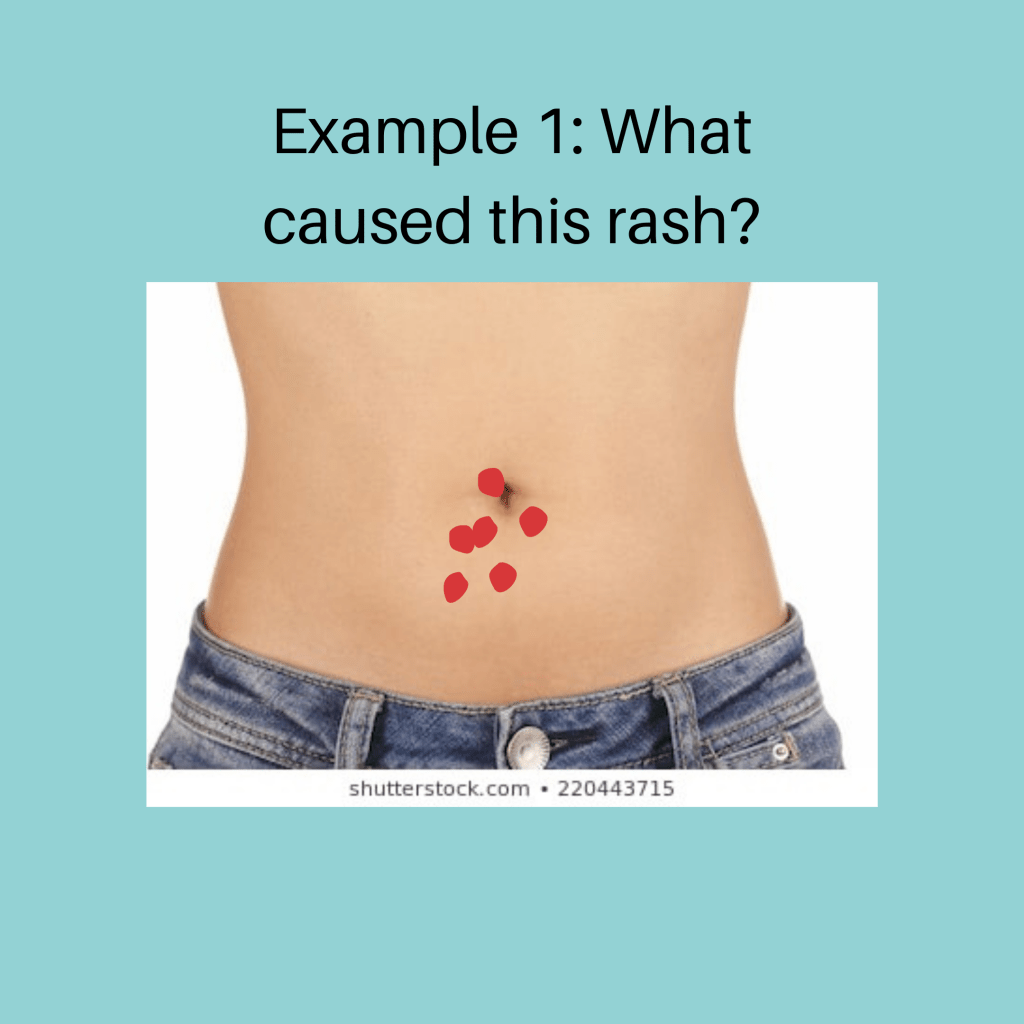
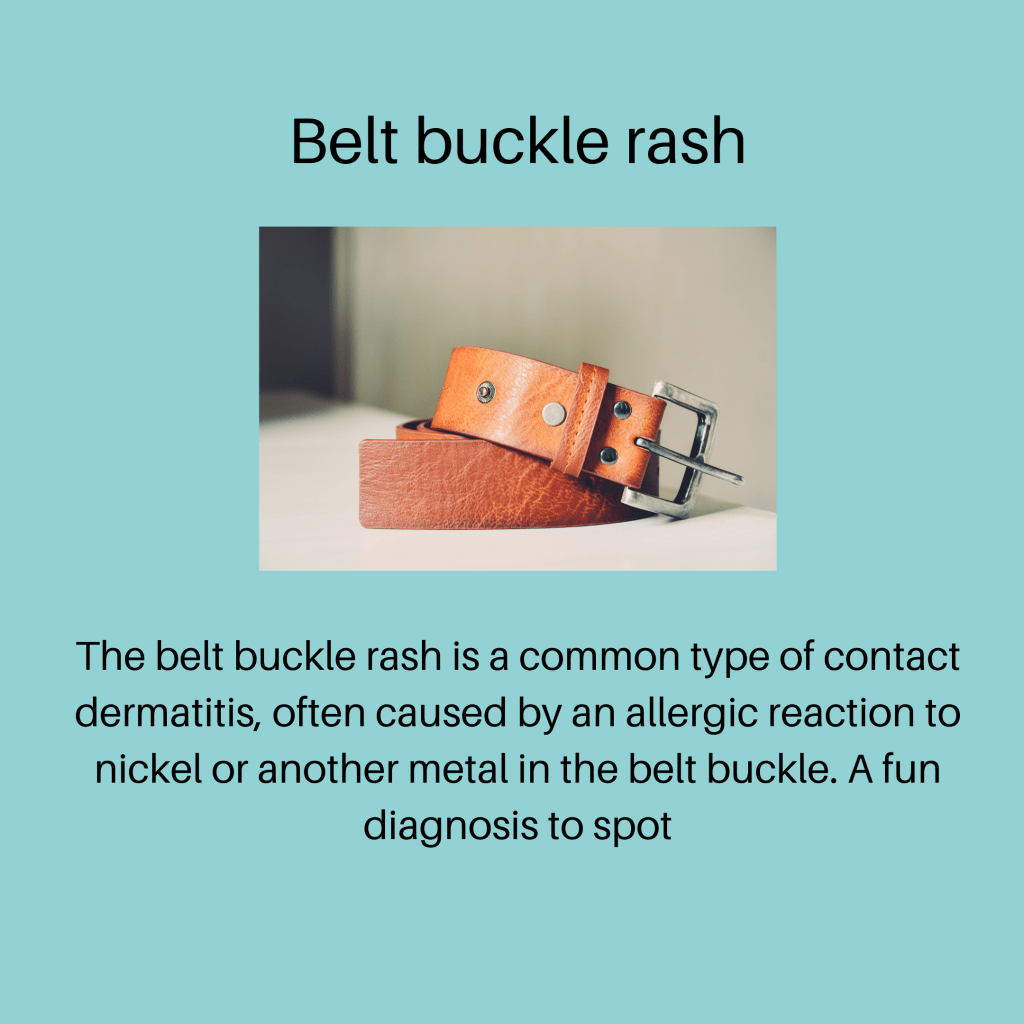
The way we can identify what caused the allergic contact dermatitis is via the location of the rash. Here’s an interactive example:
References:
[1] Contact Dermatitis [Internet]. London: British Association of Dermatologists; 2020 [cited 6 July 2020].
[2] Contact dermatitis – Symptoms and causes [Internet]. Mayo Clinic. 2020 [cited 6 July 2020]. Available from: https://www.mayoclinic.org/diseases-conditions/contact-dermatitis/symptoms-causes/syc-20352742
[3] Murphy P, Hooten J, Atwater A, Gossman W. Allergic Contact Dermatitis [Internet]. Ncbi.nlm.nih.gov. 2020 [cited 6 July 2020]. Available from: https://www.ncbi.nlm.nih.gov/books/NBK532866/



 skinzar
Leave a comment